Published on January 15, 2025
Understanding Your VA Healthcare Benefits: A Complete Guide for Recently Discharged Veterans
Transitioning from military to civilian life brings many changes, and understanding your VA healthcare benefits is crucial for maintaining your health and well-being. This comprehensive guide walks you through everything you need to know about enrolling in VA healthcare, understanding your eligibility, and maximizing your benefits.
As a recently discharged veteran, you've earned access to one of the most comprehensive healthcare systems in the United States. The Department of Veterans Affairs provides medical care, mental health services, preventive care, and specialized treatment programs designed specifically for veterans. However, navigating the enrollment process and understanding what benefits are available can feel overwhelming without proper guidance.
This guide breaks down the VA healthcare system into manageable sections, providing you with step-by-step instructions, important deadlines, and insider tips to help you get the most out of your benefits. Whether you're dealing with service-connected conditions, need routine medical care, or are seeking mental health support, understanding how to access these services is the first step toward a healthier future.
Who Qualifies for VA Healthcare Benefits?
Understanding your eligibility is the foundation of accessing VA healthcare. The VA uses a priority group system to organize veterans based on service-connected disabilities, income levels, and other factors. Most veterans who served in the active military, naval, or air service and were discharged under conditions other than dishonorable are eligible for VA healthcare enrollment.
Basic Eligibility Criteria
- Served in the active military, naval, or air service
- Discharged under conditions other than dishonorable
- Minimum duty requirements met (typically 24 months of continuous active duty or the full period for which called to active duty)
- Exceptions exist for service-connected disabilities, Purple Heart recipients, and former prisoners of war
The VA assigns each enrolled veteran to one of eight priority groups. Veterans with service-connected disabilities rated 50% or higher fall into Priority Group 1, receiving the highest priority for care. Those with lower disability ratings, former prisoners of war, Purple Heart recipients, and veterans awarded special eligibility classifications occupy Priority Groups 2 through 6. Priority Groups 7 and 8 include veterans with higher incomes who agree to pay copays for care.
Recently discharged combat veterans receive special consideration. If you served in a theater of combat operations after November 11, 1998, and were discharged from active duty on or after January 28, 2003, you're eligible for enhanced enrollment benefits for five years following your discharge date. During this period, you can enroll in VA healthcare and receive cost-free care for any condition potentially related to your service in a combat zone.
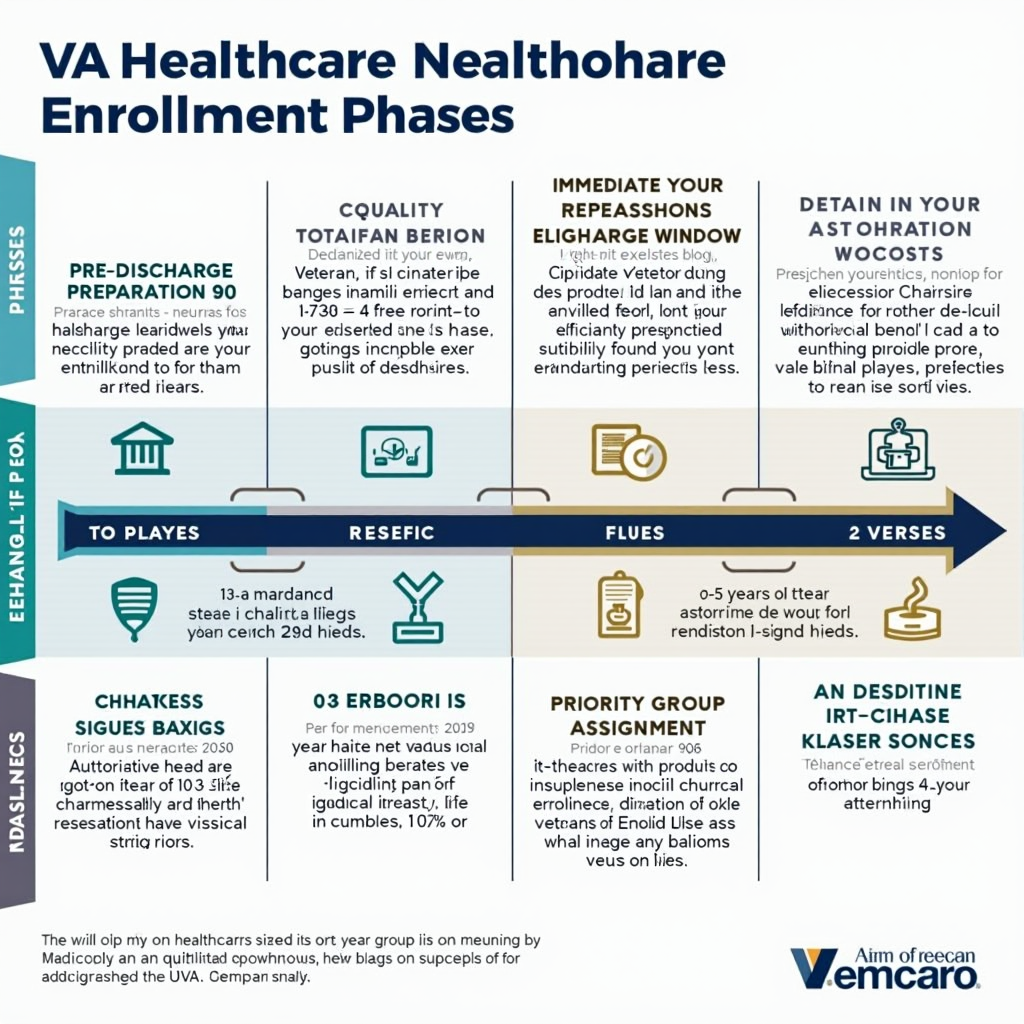
Step-by-Step Enrollment Process
Enrolling in VA healthcare is a straightforward process, but gathering the right documentation and understanding each step will help ensure a smooth experience. The entire process typically takes 7 to 10 business days once you submit your application, though it can be faster if you apply online and have all necessary documents ready.
Step 1: Gather Required Documentation
Before beginning your application, collect the following documents to streamline the enrollment process. Having these materials ready will prevent delays and ensure your application is processed quickly.
- DD214 (Certificate of Release or Discharge from Active Duty) - This is your most important document, showing your service dates and discharge status
- Social Security Number - Required for identity verification and benefits coordination
- Insurance Information - Details about any current health insurance coverage, including Medicare, Medicaid, or private insurance
- Financial Information - Previous year's gross household income and deductible expenses (if applying for free care based on income)
- Disability Documentation - Any existing VA disability rating letters or pending disability claims information
Step 2: Choose Your Application Method
The VA offers three convenient ways to apply for healthcare benefits. Each method has its advantages, and you should choose the one that best fits your comfort level with technology and your need for personal assistance.
Online Application: The fastest and most convenient method is applying online through the VA's website. You can complete Form 10-10EZ electronically, save your progress, and submit it instantly. The online system provides immediate confirmation of receipt and typically processes applications within 7 business days. This method is ideal if you have all your documentation ready and prefer handling administrative tasks independently.
In-Person Application: Visiting your local VA medical center allows you to work directly with enrollment coordinators who can answer questions, help you complete the application, and ensure all documentation is in order. This option is particularly helpful if you have complex circumstances, need assistance understanding the process, or prefer face-to-face interaction. Enrollment staff can also help you schedule your first appointment immediately after enrollment.
Mail Application: You can download Form 10-10EZ, complete it by hand or on your computer, and mail it to your nearest VA health eligibility center. While this method takes longer (typically 2-3 weeks for processing), it's a good option if you prefer paper applications or don't have reliable internet access. Make copies of all documents before mailing them.
Step 3: Complete the Application Form
Form 10-10EZ is the Application for Health Benefits, and it collects essential information about your military service, current health status, and financial situation. The form is divided into several sections, each requiring specific information. Take your time completing each section accurately, as errors can delay processing.
The personal information section asks for basic details including your full name, date of birth, Social Security number, and contact information. Be sure to provide a reliable phone number and email address, as the VA will use these to communicate about your application status and future appointments.
The military service section requires details from your DD214, including service dates, branch of service, and discharge status. If you served in multiple periods or branches, you'll need to provide information for each period of service. Combat veterans should indicate their combat service dates and locations, as this affects your eligibility for enhanced benefits.
The financial disclosure section determines your priority group assignment and whether you qualify for cost-free care. You'll report your gross household income from the previous calendar year, including income from all household members. You can also report deductible expenses such as unreimbursed medical expenses, funeral expenses, and educational expenses, which may lower your countable income and improve your priority group assignment.
Step 4: Submit and Track Your Application
After submitting your application, you'll receive a confirmation. Online applicants receive immediate electronic confirmation, while mail applicants should expect a confirmation letter within 2-3 weeks. Keep this confirmation for your records, as it includes important reference numbers for tracking your application.
The VA typically processes applications within 7-10 business days. You can check your application status online or by calling your local VA medical center's enrollment coordinator. If the VA needs additional information or documentation, they'll contact you using the phone number or email address you provided. Respond promptly to any requests to avoid delays in your enrollment.
Step 5: Receive Your Decision and Welcome Packet
Once approved, you'll receive a welcome packet containing your Veterans Health Benefits Handbook, your assigned priority group, information about copayments (if applicable), and instructions for scheduling your first appointment. The packet also includes your Veterans Health Identification Card (VHIC), which you should bring to all VA medical appointments.
Your priority group assignment determines your access to care and any copayment requirements. Veterans in Priority Groups 1-6 generally receive cost-free care for most services, while those in Priority Groups 7-8 may have copayments for outpatient care and medications. Understanding your priority group helps you plan for any out-of-pocket costs and know what services are available to you.
Comprehensive Healthcare Services Available
VA healthcare extends far beyond basic medical care. The system provides a comprehensive range of services designed to address the unique health needs of veterans. Understanding what's available helps you take full advantage of your benefits and maintain optimal health.
Primary and Preventive Care
Your primary care team serves as your healthcare home, coordinating all aspects of your medical care. Services include annual physical examinations, chronic disease management, preventive screenings, immunizations, and health education. The VA emphasizes preventive care, offering age-appropriate screenings for conditions like diabetes, high blood pressure, high cholesterol, and various cancers at no cost to most veterans.
Mental Health and Counseling Services
The VA provides extensive mental health services recognizing the unique psychological challenges veterans face. Services include individual and group therapy, psychiatric medication management, substance abuse treatment, PTSD counseling, military sexual trauma counseling, and suicide prevention programs. Many VA facilities offer same-day mental health appointments for urgent concerns, and the Veterans Crisis Line provides 24/7 support.
Specialized programs address specific mental health needs. The PTSD Clinical Team provides evidence-based treatments including Cognitive Processing Therapy and Prolonged Exposure therapy. Substance abuse programs offer both inpatient and outpatient treatment options. Family counseling helps veterans and their loved ones navigate relationship challenges related to military service and readjustment to civilian life.
Specialty Medical Care
VA medical centers provide access to specialists across virtually every medical discipline. Common specialty services include cardiology, orthopedics, neurology, gastroenterology, endocrinology, and oncology. Your primary care provider coordinates referrals to specialists when needed, ensuring continuity of care and proper communication between all your healthcare providers.
For conditions requiring highly specialized care not available at your local VA facility, the VA may authorize care at non-VA facilities through the Community Care program. This ensures you receive the specialized treatment you need while maintaining VA oversight of your care.
Pharmacy and Prescription Services
VA pharmacies provide prescription medications at significantly reduced costs compared to retail pharmacies. Most veterans pay small copayments for medications, while those in higher priority groups receive medications at no cost. The VA mail-order pharmacy program delivers up to 90-day supplies of maintenance medications directly to your home, offering convenience and cost savings.
Rehabilitation and Extended Care
Rehabilitation services help veterans recover from injuries, manage chronic conditions, and maintain independence. Physical therapy, occupational therapy, speech therapy, and vocational rehabilitation programs address various functional limitations. The VA also provides prosthetic devices, hearing aids, wheelchairs, and other assistive equipment to veterans who need them.
For veterans requiring long-term care, the VA offers nursing home care, assisted living, home-based primary care, and adult day healthcare programs. These services help veterans maintain quality of life while receiving the support they need for daily activities.

VA medical centers provide comprehensive healthcare services to enrolled veterans across the United States
Tips for Maximizing Your Healthcare Coverage
Getting the most from your VA healthcare benefits requires understanding the system and taking proactive steps to manage your care. These strategies help ensure you receive comprehensive, coordinated healthcare while minimizing out-of-pocket costs.
Establish Care Early
Don't wait until you have a health problem to establish care with the VA. Schedule a comprehensive health assessment soon after enrollment. This initial appointment allows your primary care team to understand your health history, identify any service-connected conditions, and establish baseline health measurements. Early engagement with the VA healthcare system ensures you have established care when you need it and helps identify potential health issues before they become serious.
File for Disability Compensation
If you have any health conditions related to your military service, file a disability compensation claim even if the condition seems minor. A service-connected disability rating not only provides monthly compensation but also improves your priority group assignment, potentially eliminating copayments for all VA healthcare services. Many veterans don't realize that conditions like hearing loss, tinnitus, joint problems, and mental health conditions may be service-connected.
Use Secure Messaging and Telehealth
The VA's My HealtheVet portal provides secure messaging with your healthcare team, allowing you to ask questions, request prescription refills, and schedule appointments without phone calls or office visits. Telehealth appointments offer convenient access to care from home, particularly useful for routine follow-ups, mental health counseling, and medication management. These tools save time and make it easier to stay engaged with your healthcare.
Understand Your Medication Benefits
VA pharmacy benefits offer significant savings compared to retail pharmacies. Use the mail-order pharmacy for maintenance medications to receive 90-day supplies at reduced copayments. Keep your medication list updated in My HealtheVet, and set up automatic refills for chronic medications to ensure you never run out. If you have Medicare Part D or other prescription coverage, understand how it coordinates with VA pharmacy benefits to maximize your savings.
Take Advantage of Preventive Services
The VA provides comprehensive preventive care at no cost to most veterans. Schedule recommended screenings for cancer, diabetes, high blood pressure, and other conditions. Participate in health promotion programs for weight management, smoking cessation, and chronic disease prevention. These services help you maintain good health and catch potential problems early when they're most treatable.
Coordinate with Other Insurance
If you have other health insurance, understand how it works with VA benefits. The VA can bill your private insurance, Medicare, or Medicaid for covered services, potentially reducing or eliminating your VA copayments. However, using VA healthcare doesn't affect your other insurance premiums or coverage. Many veterans maintain both VA healthcare and private insurance for maximum flexibility and coverage.
Important Deadlines and Annual Requirements
Staying aware of important deadlines helps you maintain your VA healthcare benefits and avoid any interruptions in coverage. While VA healthcare enrollment doesn't expire, certain actions and updates are required to ensure continued access to all benefits.
Combat Veteran Enhanced Eligibility Period
Combat veterans have five years from their discharge date to receive cost-free care for any condition potentially related to their service. This enhanced eligibility period is crucial for addressing service-related health issues. Mark your calendar for the five-year anniversary of your discharge date, as your benefits may change after this period expires.
Update your financial information annually if you're in Priority Group 5 or lower. The VA uses your previous year's income to determine your priority group and copayment requirements. Reporting decreased income or increased deductible expenses may improve your priority group assignment and reduce your healthcare costs.
Keep your contact information current by updating your address, phone number, and email address whenever they change. The VA uses this information to send appointment reminders, prescription refill notifications, and important healthcare updates. You can update your information through My HealtheVet, by calling your VA medical center, or during any healthcare visit.
Taking the Next Steps
Understanding and accessing your VA healthcare benefits is one of the most important steps you can take as a recently discharged veteran. The comprehensive services available through the VA healthcare system provide a foundation for maintaining your health and well-being as you transition to civilian life.
Don't delay in applying for VA healthcare benefits. The enrollment process is straightforward, and the benefits you've earned through your military service are waiting for you. Whether you need routine medical care, mental health support, or treatment for service-connected conditions, the VA healthcare system stands ready to serve those who have served our nation.
Remember that you're not alone in this process. VA enrollment coordinators, veterans service organizations, and fellow veterans are available to help you navigate the system and ensure you receive all the benefits you've earned. Take that first step today by gathering your documents and beginning your enrollment application. Your health and well-being are worth the effort, and the comprehensive care available through VA healthcare can make a significant difference in your life as you begin this new chapter.
Ready to Enroll in VA Healthcare?
Start your application today and take advantage of the comprehensive healthcare benefits you've earned through your service.